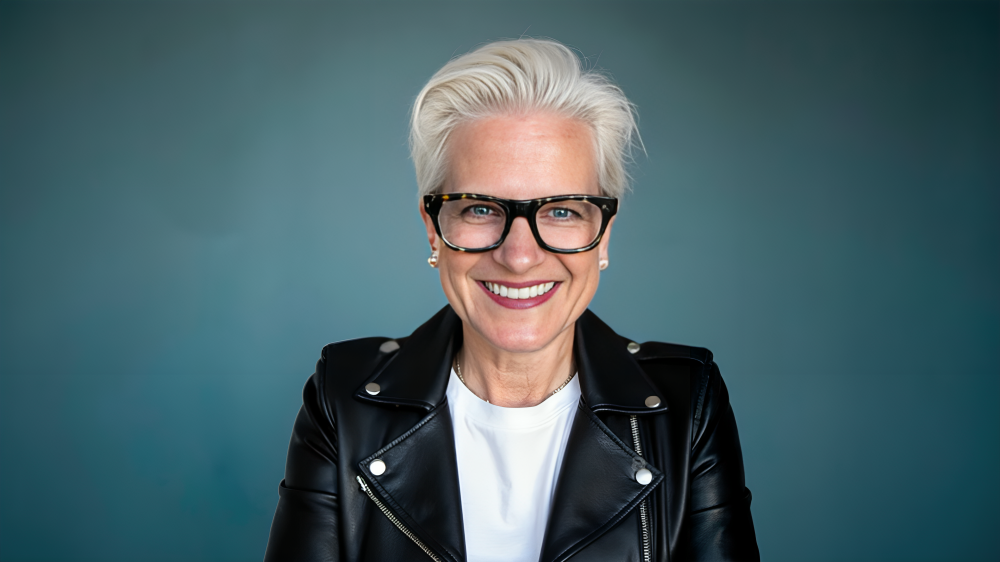
Leaving a senior corporate role sounds liberating on paper, but the reality of an empty calendar and zero staff sets in quickly. After spending more than 25 years running North American and global media divisions across MindShare, Starcom/Mediavest, and TrueCar, Beth Mach made that jump when she co-founded Spacely Media, a media marketplace built to automate print, out-of-home, and in-venue channels. Moving from running large corporate divisions to building an early-stage company forced a complete reset in how she approached leadership. Stripped of corporate safety nets and enterprise brand recognition, Mach discovered that leading an early-stage company requires a completely different kind of authority.
Rebuilding Credibility Without Enterprise Backing
In a large corporate organization, the logo on your business card does a lot of the heavy lifting. Senior leaders walk into rooms where the company name has already established trust, giving meetings instant credibility. Mach noticed the stark contrast immediately once she stepped out on her own without that institutional backing. “Leaving a corporate title can sound glamorous, and then Monday morning comes. No team is waiting for direction, no budget is approved, no infrastructure around you, and maybe, most importantly, no company name opening the door before you even walk through it,” Mach explains.
Without a corporate reputation to lean on, every single conversation requires a much sharper focus on individual substance. Pitching partners and clients means relying entirely on the clarity of the logic and the strength of the solution being offered. “Your title gets you into the room. Your thinking is what keeps you there,” Mach points out. “Inside a large organization, you sometimes underestimate how much credibility comes with the company behind you. As a founder, you have to earn that credibility much more quickly. The idea has to be clear, the problem has to matter, and you have to explain why you are the person who should be solving it.”
Moving Forward With Incomplete Information
Large corporations are built to minimize risk by filtering major decisions through committees, research departments, and legal teams. While that structure prevents costly mistakes, it also slows down execution and encourages leaders to wait for total certainty before moving. In an early-stage company, that level of hesitation can easily stall momentum before a product even finds traction in the market. Experienced executives who move into early-stage leadership must quickly adapt to making consequential calls with limited data.
For Mach, adjusting to this environment meant accepting that speed often matters far more than having every question answered in advance. Running Spacely Media required her to make critical operational calls long before all the variables were clear. “You get much more comfortable making decisions before you have all of the answers,” Mach says. “I’ve spent years with research, analytics, legal teams, and layers of expertise around major decisions. Today, I often have 70% of the information I would ideally like and still have to make that call. I’ve learned momentum matters. Make the best decision you can, learn quickly, and adjust.”
Focusing On Operations Before Scale Takes Over
Much of the public attention around new ventures centers on big ideas, creative branding, and fundraising pitches, while the day-to-day mechanics get pushed aside. Mach argues that ignoring operations early on creates structural weaknesses that will inevitably break a company when it tries to scale. At Spacely Media, automating media buying for physical and digital inventory requires disciplined processes behind the technology. If the operational foundation is disorganized, the product itself cannot deliver reliable results to clients. Setting up clear workflows for sales, communication, and client onboarding might not seem glamorous, but it keeps the business functional through periods of rapid change. Seasoned operators recognize that consistency across everyday tasks is what protects customer relationships over the long run. “And operations matter much earlier than most founders think,” Mach emphasizes. “The product and the vision get most of the attention, but eventually the business has to actually work. How you sell, how you onboard, how you communicate, how you make decisions, and how you deliver consistently – those things may not be the most exciting part of building a company, but often they determine whether growth holds things together.”
Stepping away from the corporate world does not erase decades of management experience, but it does expose whether a leader relied on institutional power rather than genuine capability. When you strip away dedicated support teams, big budgets, and corporate prestige, what remains is your ability to communicate clearly, make decisions, and execute. The transition becomes an honest assessment of personal leadership ability outside a traditional corporate structure. Many executives discover that managing a large corporate hierarchy is fundamentally different from building a sustainable operation from the ground up. For Mach, the transition served as a clear test of what genuine leadership looks like when the corporate scaffolding is removed. Her experience offers a practical reality check for other senior leaders considering a similar jump into an early-stage company. “I don’t think leaving corporate made me less of an executive. It made me much more aware of what leadership looks like when you take away the title, the resources, and the infrastructure,” Mach reflects. “And that may be the more interesting question: ‘How much of the leader you are today would still be there if the title disappeared tomorrow?’”
Follow Beth Mach on LinkedIn for more insights on early-stage leadership, operational scaling, and automating media buying across print, out-of-home, and in-venue channels.