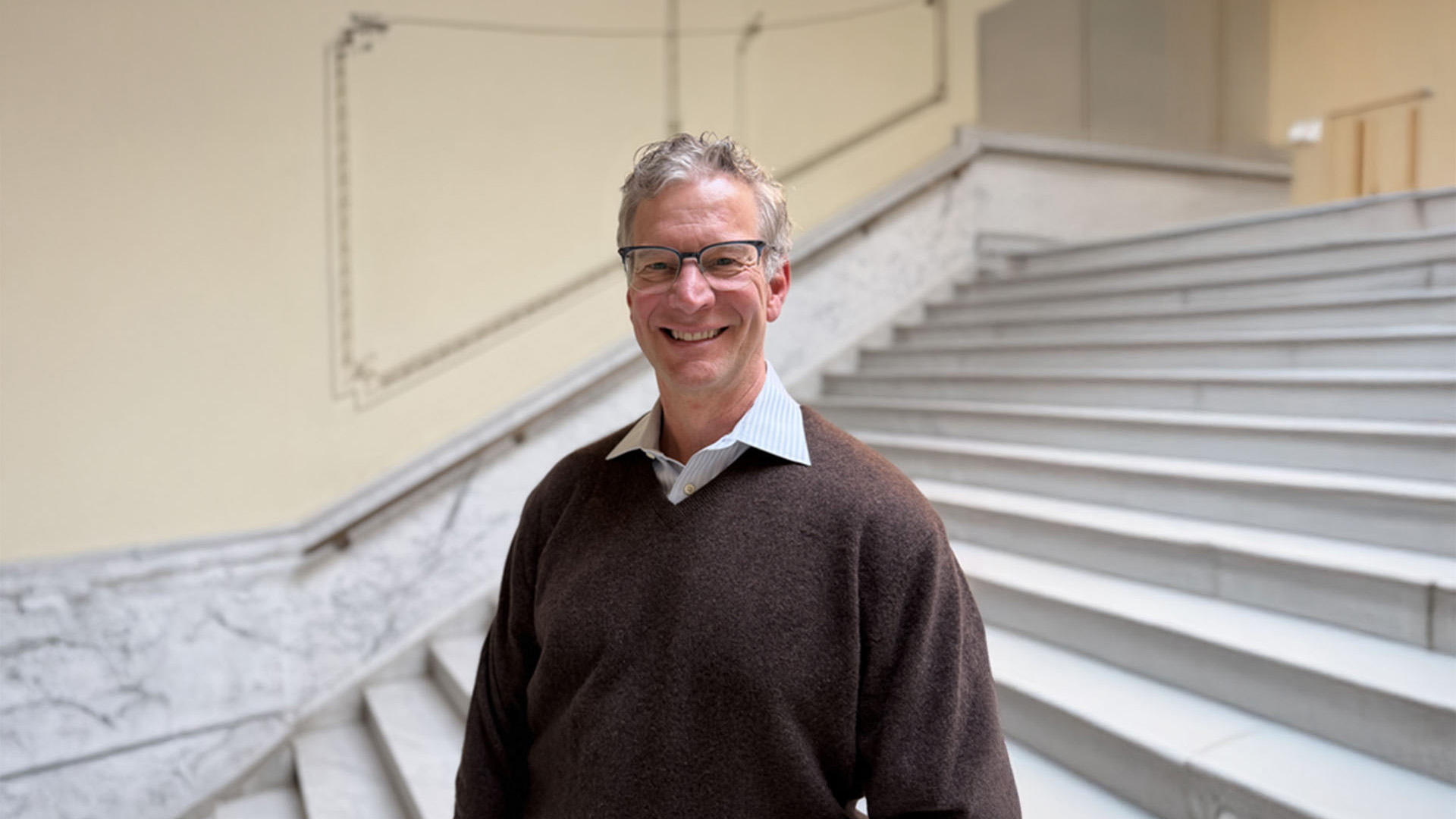
The leaders who leave a lasting mark do not simply grow a stock price. They build something defined by purpose, shaped by the courage to reshape an industry, and designed to serve people well beyond the immediate business. Joe Mozden Jr., Chief Executive Officer (CEO) of Global Learning Exchange and Chief Strategy Officer (CSO) at Forward Health Group, has spent more than three decades leading growth strategy, mergers and acquisitions (M&A), and operational transformation across software as a service (SaaS), data analytics, education, and healthcare. His framework for building at a global scale is built on a sequence that most ambitious organizations get out of order. “A great vision without execution,” Mozden states, “is called a slide deck.”
Clarity of Mission Is the Compass for Everything Else
Global impact does not come from doing more. It comes from knowing precisely what must be created or changed, and why that matters. That clarity functions as the compass for every decision that follows; every hire, dollar invested, market entered, and partnership evaluated.
At Global Learning Exchange, the mission is to reshape learning access. At Forward Health Group, it is improving patient outcomes. Both begin from the same discipline, defining the problem to be solved before defining the solution to be built. Without that foundation, strategy becomes reactive, shaped by market pressure, competitive noise, and short-term opportunity rather than by a coherent view of what the organization is actually trying to change in the world. Clarity is not a values exercise. It is an operational requirement.
Strategy and Execution Must Move in the Same Direction
The distance between a compelling strategic vision and a functioning global business is execution, and in global markets, execution discipline is what separates organizations that expand from those that stall. Mozden’s observation across three decades and multiple sectors is that scalable growth requires strategy, operations, and capital, all moving in alignment. When one is pointing in a different direction, the organization absorbs the friction and loses momentum at exactly the moments it can least afford to.
That alignment requires specific practices such as clear metrics tied to strategic objectives, capital raised for specific goals rather than general growth, and business operations re-engineered to land the plan rather than support the previous one. The organizations that get this right treat execution discipline not as a management function but as a strategic capability, one that determines whether the strategy actually reaches the market it was designed to serve.
Trust Travels Faster Than Any Playbook
Transformation is a human project. Building high-performance teams across continents requires something that no playbook fully captures, and for which no Master of Business Administration (MBA) program can adequately prepares people; the ability to combine performance accountability with empathy and cultural agility in ways that unlock commitment rather than surface compliance. “Trust travels faster than any playbook,” Mozden reflects, drawing on the experience of building and leading teams across multiple geographies.
When people in different regions, operating under different cultural norms and market conditions, trust that the leadership understands their context and holds them to standards that are both clear and fair, they deliver results that a purely process-driven approach cannot produce.
The investment in people, in their development, their agency, and their belief in the mission, is what makes global scale possible without losing the quality of execution that made the organization worth scaling in the first place. The shift from growing a business to building lasting global impact starts with clarity, runs through disciplined execution, and is sustained by the people trusted to carry it forward.
Follow Joe Mozden Jr. on LinkedIn for more insights on global growth strategy, operational transformation, and building purpose-driven organizations at scale.